
Soil biology • long-term fertility
Biochar for Living Soil
Learn what biochar is, why it works,… and how to charge and apply it to support soil microbes, improve nutrient cycling, and build lasting fertility in your garden!
Biochar basics
What biochar is… (and what it’s not)
Biochar is a stable, carbon-rich, highly porous soil amendment made by burning carbon biomass with limited oxygen (pyrolysis), and once burned, inoculated with nutrients.
Carbon Biomass is anything once living, like wood, woodchips, acorns, cardboard, paper, leaves, straw, peach pits, etc., that has carbon in its structure.
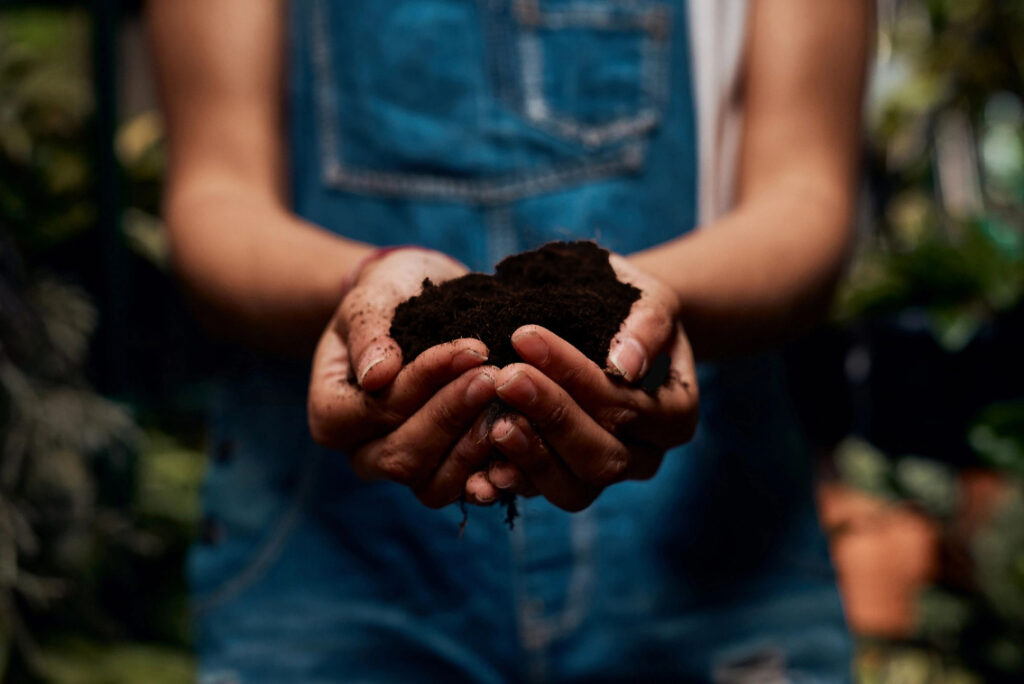
Biochar’s porous structure forms a habitat for microbes in the soil, while simultaneously providing nutrients and water to make them flourish! It’s a perfect soil amendment!
Think of it as a long-lasting soil microbe habitat with benefits… when inoculated with compost and microbes!
Until it’s charged with nutrients and microbes, it’s only charcoal, which *by itself* is NOT beneficial to your garden, at least in the first year it’s applied.
Why we’re hooked on biochar—
We don’t make and use Biochar because we read about it in a book or watched a video. We, however, DID become aware of it through books and videos… but that’s not WHY we use it!
As you may know, we use microscopy to analyze our soil. This helps us understand how everything we do affects it, both the good and the bad. For example, we can identify whether harmful OR beneficial protozoa are present. We also analyze the Fungal to Bacterial (F:B) Ratio and make modifications with the type of compost we apply.
We’re getting closer, but even that’s not the REAL reason we use it!
Our plants are larger and more productive. They taste better. Our garden looks better than ever. Our plants grow to maturity faster. That’s like extending our growing season. We haven’t seen a single valid reason to not use it!
Microbe Habitat
Its porosity shelters beneficial bacteria, fungi, and microarthropods, supporting a more diverse soil food web.
Nutrient Holding Capacity
Charged biochar attracts and retains nutrients in the root zone instead of letting them leach away.
Water & Structure
Improves moisture buffering and helps sandy soils hold water. This facilitates aggregation in biologically active soils and holds many more nutrients. It simultaneously opens up clay soil for more air and root penetration!
Long-term effectiveness
Biochar acts as a long-term carbon sink, sequestering carbon, and benefiting your garden, for hundreds to thousands of years.
So let’s dive deep into this—
First… THREE misconceptions—
Misconception 1: I have a deep admiration for the care and steadfastness scientists put into their studies. I come from a science background, and it pains me to say this:
The biochar studies error— most were done on charcoal, not biochar!
I know most of the studies weren’t done on biochar. For a study to be valid, EVERY detail of the process HAS to be documented. Not even one small step can be omitted! And NO charging of the charcoal was mentioned!
All the conclusions of their scientific studies are questionable, not because THEY made ANY error, (they didn’t), but because they called them Biochar Studies, when they were actually Charcoal Studies! If their studies were on charged biochar, they necessarily would have stated that in their abstracts.
They are valid for charcoal however! That’s important to know, and you can get some understanding from them!
Put plainly, the studies done by reputable scientists on CHARCOAL misstate they were done on BIOCHAR!
But I’m not faulting them at all. They did accurate studies. But, they relied on the vendors’ misnomer, who called charcoal… biochar!
Biochar’s popularity surged in the modern era. Many jumped on the profit bandwagon. All without understanding what it was or how it worked.
I fully agree with and respect what science says CHARCOAL does when mixed in garden soil. It’s what I’ve been saying all along: it can be harmful to your soil when not charged properly!

Charcoal has a natural negative ionic electrical charge, which acts like a sponge attracting and soaking up all the positively charged ions nearby, just like a magnet attracts iron!
Let me explain why that’s a very bad thing—
Then, I’ll show you how you can turn it into a great thing.
When you add CHARCOAL to your soil without first inoculating it with nutrients, it sucks the nutrients FROM your soil. This makes them unavailable to your plants! AND that’s exactly what most of the studies show… on CHARCOAL!
But here’s how to make it very great: when you charge the charcoal in a nutrient solution with compost or manure tea, (thereby making it biochar), it absorbs all the nutrients and biology in the solution it’s soaking in. It then releases them INTO your soil, instead of absorbing nutrients OUT of your soil, the way charcoal does!
Misconception 2: There’s something called Activated Charcoal that’s been used for decades to purify water. Again, the reason it can be used for that, is because of the natural electrical charge I was talking about that attracts any contaminants in the water and binds them to itself.
In the same way, charcoal tablets are given to someone who has ingested poison. The charcoal absorbs and isolates the poison. This prevents the person’s body from absorbing it in his/her digestive tract, causing death.
Another part of the activated charcoal misconception is used when we talk about CHARGING biochar!
The word ACTIVATE was used at first, rather than the correct ways we now say it— we either CHARGE or INOCULATE, the charcoal, to convert it into Biochar!
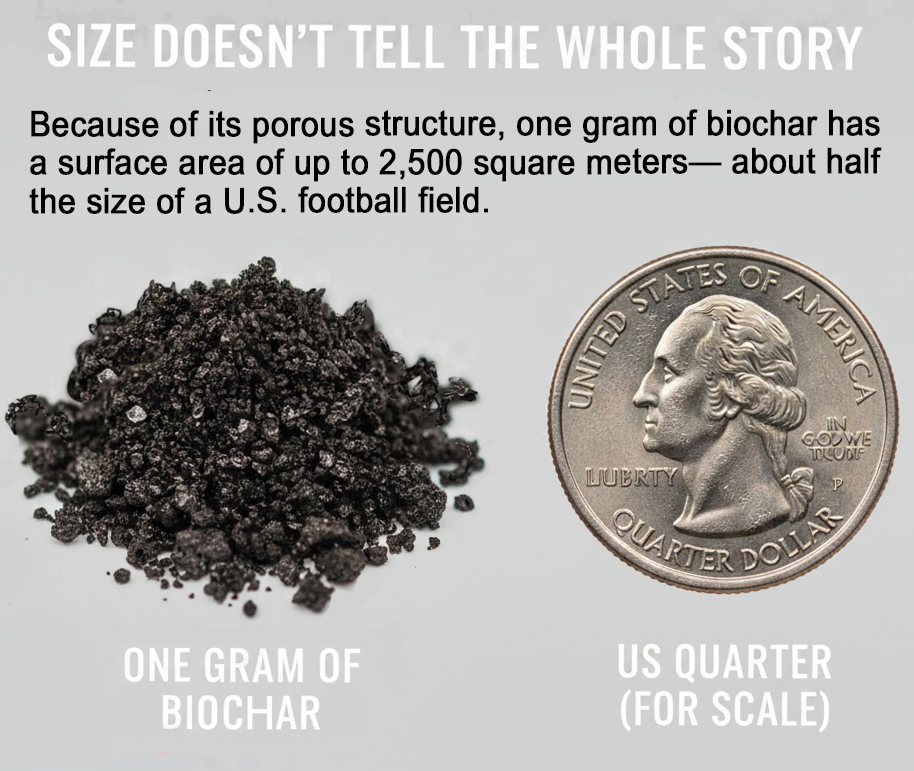
Why this matters is that the Activated Charcoal (water purification) Industry found it was most effective when ground to a fine powder, as the SURFACE AREA of the charcoal increased exponentially. That meant MORE toxins could be captured by the charcoal in the SHORT TIME the water passed by it.
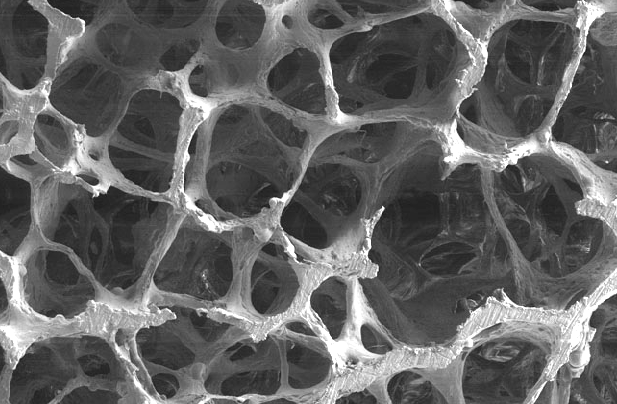
Powdering biochar for your garden is *not necessary* and creates a LOT of work and of dust! I know because that’s what I did at first, and I still powder SOME that way to add to my seed-starting mixes. It’s messy, you have to wear a respirator, if you do it in the house, it gets everywhere, and if you do it outside, it blows away!
Under an electron microscope, you’ll see that charcoal is VERY porous. This porous structure provides protected places for the biology to live INSIDE, and not merely on the surface where they can be washed away very easily!
Some have made the argument that charcoal MUST be crushed into a fine powder for the bacteria to reach the interior area. But, a piece of wood was once a tree, and all the pores were pathways for water flowing from the roots to the leaves! They’re not dead-end paths.
We soak our charcoal in a nutrient solution for a long time (three months or more), and the nutrients permeate the charcoal to its core and pack into the pores. They don’t just abide on the surface. Biochar holds so much more water and nutrients in the cubic space than it ever could solely on the surface, as I demonstrated in one of my videos.
But it’s worthy to note that it’s not only bacteria that reside in the biochar. There are microorganisms of all different sizes, like protozoa and beneficial nematodes, and larger microorganisms like microarthropods and arthropods that take refuge in it as well
Biochar never decomposes or is taken up by plants. It’s NOT a nutrient. With nutrients or compost, the smaller particles will more easily decompose. Then, plants can take up those elements. Biochar remains in your soil for hundreds or thousands of years with no decomposition… and is NEVER taken up by plants!
Another way to think of it—
Imagine it a nutrient magnet that holds the PLANT-AVAILABLE nutrients right where they’re needed, in the root zone of all your plants! I’ll talk about this more on the next Biochar Page. I’ll put a link on the bottom of this page.
Misconception 3: You can’t test the effectiveness of biochar on potted plants. For it to work, it must be connected to the mycorrhizal fungal and bacterial network. This network can extend for hundreds of yards in all directions to bring nutrients not in the immediate area to the root zone of the plant. A potted plant has no such ability!
I believe the two ways to test the efficacy of ANY nutrient, or gardening method, are to 1) Observe the effects it has on your yield and the health of your plants…
AND 2) Observe the living biology on the microscope slides!
When something’s really wrong with your soil it becomes visible immediately under the lens. You might see disease-causing organisms like ciliates or root-feeding nematodes. Or you may discover your soil is bacterial-dominated with no fungi at all! You should see about an equal amount of fungi hyphae as bacteria on the slides for the indicator that your soil is healthy!
When you see things wrong with your soil, you can take actions to correct it, usually with biochar, compost or compost tea, or breaking up soil compaction, among other things!
Practical how-to
Using biochar safely and effectively
Use this guide to avoid common mistakes and get the biology-first benefits.
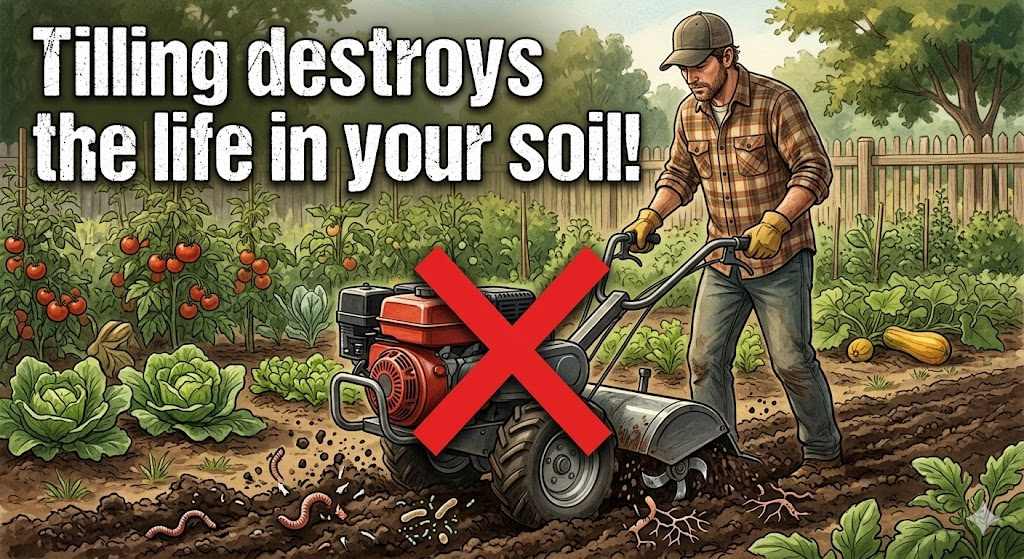
Providing ideal conditions for your soil’s microbiology with Biochar creates loose, deep soil over time without tilling!
1) Choose the right material
Use clean, untreated feedstock and quality biochar (no painted/treated wood). Aim for a mix of particle sizes—fines plus small chunks.
2) Charge it (don’t skip this)
Mix biochar with compost, compost tea, urine diluted with water, worm castings, or other nutrient-rich biology sources to prevent nutrient tie up in the short term.
3) Apply at approx. 10-20% ratio
So that means two inches (5cm) of biochar evenly spread on top of your bed and worked into the soil will give you a 10% ratio to a depth of 20 inches (50 cm)
4) Keep feeding the soil
Biochar works best when paired with compost, mulch, living roots, and minimal disturbance—conditions that keep microbes thriving.
Biochar FAQ
Quick answers to the questions gardeners ask most.
Do I need to charge biochar?
Yes— Charging fills its pores with nutrients and biology so the biochar feeds your biology instead of (uncharged biochar) temporarily tying up available nutrients.
Can I add biochar directly to beds?
You can, but it’s best mixed with compost or another nutrient source first. If you apply it raw, keep the rate low and place it only ON TOP of the soil without mixing.
Will biochar change my soil pH?
It can, depending on the feedstock and how it was made. If you’re unsure, test a small area first and keep an eye on pH-sensitive crops.
How much should I use?
Start with small amounts of charged biochar blended into compost or potting mixes. Build gradually over seasons as you learn how your soil responds.
Is Biochar the same as charcoal briquettes?
No. Briquettes often contain binders and additives. Use clean, additive-free biochar intended for soil use. You CAN use charcoal produced for grilling if it has NO binders or additives (i.e. lighter fluid) like the Red Oak brand.
Just crush it into small pieces about the size of a coin, charge it, and add it to your soil. Just one thing though— it probably wasn’t made at the ideal 1500°F temp, so there might still be some impurities in it!
Does biochar replace compost?
No—compost brings nutrients and living biology. Biochar is a long-term structure and habitat that works best alongside compost and mulch.
Keep learning
Building long-term fertility with biochar-best practices
Want step-by-step demos on making, charging, and applying biochar—plus composting and soil microscopy? Follow along with us on YouTube and start improving your soil this season.