
Grow more and better food by building living soil!
Learn what’s happening beneath your feet— from bacteria and fungi to earthworms and organic matter— for building fertility with compost, biochar… and biology!
What soil biology means in plain language
Soil isn’t just “dirt”—it’s a living ecosystem, with more living things in a handful of good soil than there are people on earth!
Plants exchange their sugars from photosynthesis for nutrients and disease resistance provided by bacteria, fungi, protozoa, nematodes, and other organisms.
With a healthy food web, you get better structure, steadier moisture, healthier plants, and subsequently bigger yields.
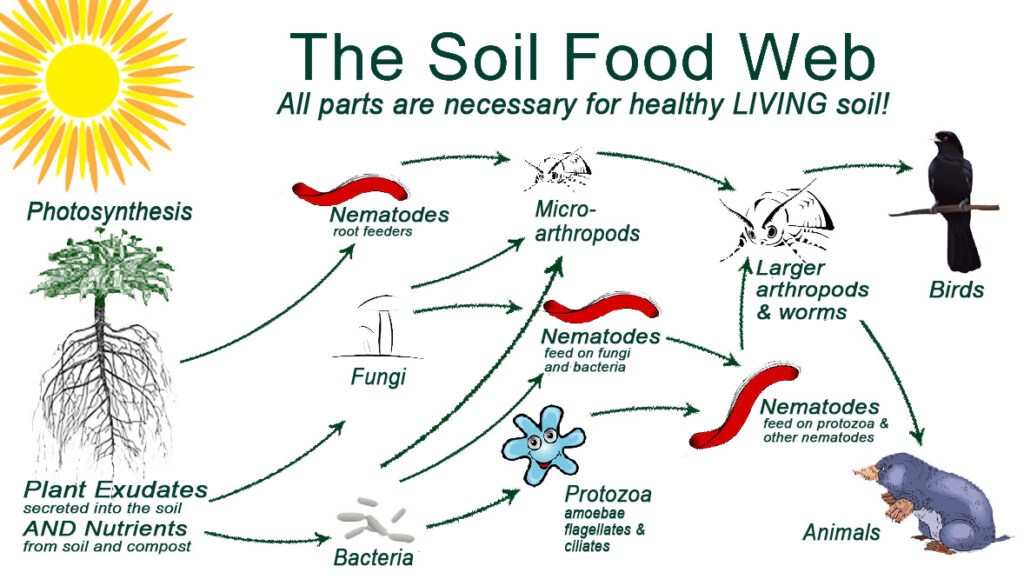
The soil food web—
is the network of all living things in your soil— plants, bacteria, fungi, protozoa, nematodes, worms, microarthropods, insects, arthropods, and animals— synergistically working to break down organic matter into plant-available nutrients.
Every life form is necessary—
A balanced soil food web has ALL the microorganisms present. It’s out of balance when one group overpowers the others, or when any are missing. The result— even though nutrients may be abundant in your soil, they may not be plant-available!
A balanced soil food web leads to healthier plants, meaning healthier food is produced for you to eat… keeping YOU healthier!
This reduces the need—
for fertilizers and promotes sustainable gardening practices! By nurturing this ecosystem, you can improve soil health and support biodiversity.
You may have heard—
about super-toxins, like Aminopyralids, and how difficult they are to eliminate from your soil! Certain microorganisms have been found to be effective at decomposing them. Microorganisms can transform harmful substances into less toxic, or non-toxic forms— or even into useful plant nutrients!
1) Photosynthesis
Here’s where it begins. Plants produce photosynthate (glucose) and send it into the soil as exudates— food for bacteria and fungi.
These exudates are encoded to instruct the microorganisms to gather any specific nutrients from the surrounding area the plants need and bring them back to the plants.
2) Bacteria
Bacteria consume the photosynthate and nutrients from the soil and organic matter. Some also convert atmospheric nitrogen into forms plants can absorb.
They further contribute to soil structure by binding soil particles into aggregates, improving aeration and water retention.
Certain bacteria can decompose harmful soil-borne toxins, protecting your soil and plants from diseases.
3) Fungi
Like bacteria, fungi are decomposers, but fungi break down more complex organic materials, such as cellulose and lignin that bacteria can’t decompose.
Having fungal-dominated soil (rather than bacterial-dominated) is the key for most crops. The exception: Cole crops like broccoli and cabbage prefer a bacterially dominated soil.
Fungi’s second role is to help plants gather nutrients. They do it through Mycorrhizae, a symbiotic association between fungi and plant roots.
The fungi can send its threadlike mycelium out into the soil hundreds of yards into the surrounding area to gather nutrients the plants need… and have indicated to the fungi that they need— through the photosynthate exudates I talked about earlier!
4) Protozoa
So, even though bacteria and fungi decompose organic matter, the nutrients still cannot be used by plants. Protozoa play a crucial role in the soil food web by consuming bacteria so nutrients can finally be released into the soil in a plant-available form. They also serve as a food source for the next soil organism, the nematodes.
5) Nematodes
Nematodes play a crucial role in the soil food web by acting as both predators and prey. They help cycle nutrients by feeding on bacteria and fungi, while also serving as food for larger soil organisms, maintaining the balance of the ecosystem.
6) Microarthropods
Microarthropods play a crucial role in the soil food web in two ways: by aiding in the decomposition of organic matter, and in consuming nematodes, fungi, and bacteria, much in the same way as nematodes do, to convert nutrients into the plant-available form.
7) Arthropods
Arthropods do much of the same things as the microarthropods by breaking down dead plant and animal material, and they also improve soil structure and aeration through their burrowing.
They also keep the microarthropods and nematodes in check to keep them from overpopulating and disrupting the balance.
8) Birds and Mammals
These play important roles in the soil food web by contributing to nutrient cycling and soil health. Also, they help control arthropod and insect populations.
Mammals, through their burrowing activities, aerate the soil and mix organic matter, enhancing nutrient availability for plants and microorganisms.
9) Humans
Our job is to oversee that everything is running smoothly and make adjustments when necessary! It’s our job, if anything’s out of balance, to take the appropriate measures to correct it— adding compost, for example, or protecting our crops from birds, mice, deer, or voles.
I don’t pretend I can leave it ALL to nature, because God created humans to LIVE on the earth and WORK it!
Biochar + Biology
Biochar is a habitat for microorganisms.
Biochar does 4 things:
- Provides homes for the network of soil biology!
- Stores the plant-available nutrients unlocked by the biological process so they won’t leach away!
- Holds moisture in your soil without waterlogging!
- Increases soil aeration by improving soil structure and creating pores, which promotes air in your soil for microbes, as well as making it easier for plants’ roots to penetrate the soil!
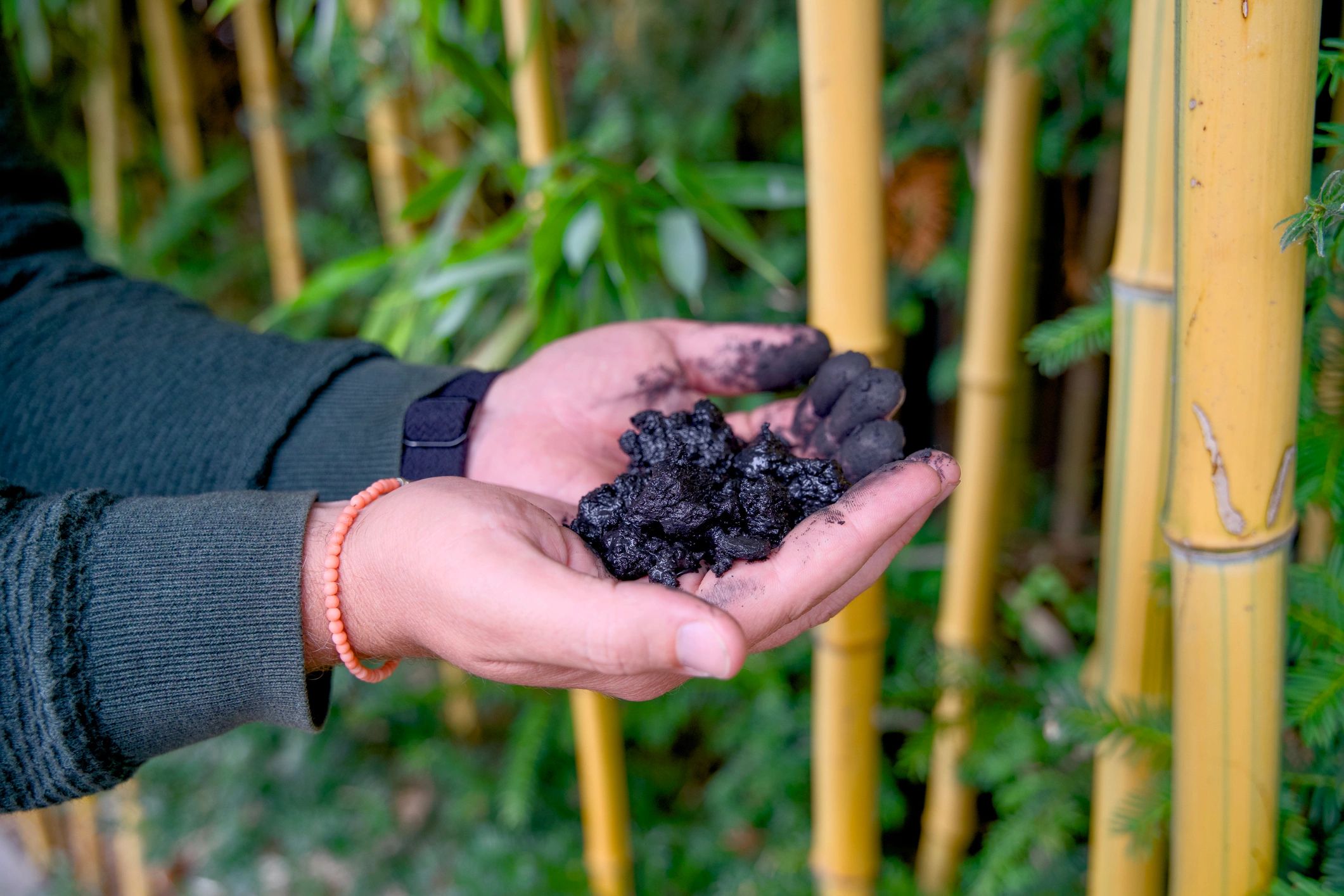
Biochar must be “charged” first (so it doesn’t tie up nutrients). Mix biochar with compost, worm castings, or nutrient-rich water, then apply as part of a broader organic matter plan. Visit our Biochar pages for more info.
the life-giving power of air in your soil
Aerobic vs. anaerobic microorganisms
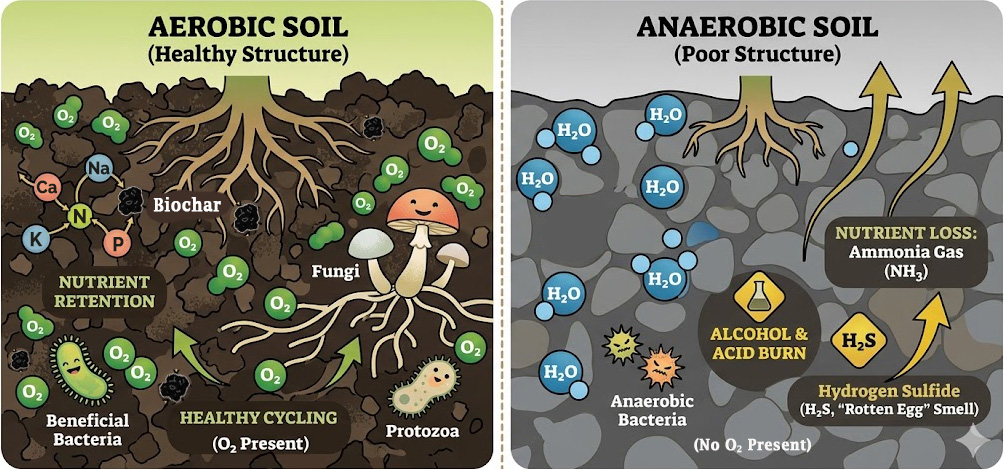
Gardeners often focus on Oxygen as the primary air component of their soil, but it’s important to consider Nitrogen, which makes up about 78% (with Oxygen coming in second at 21%). Nitrogen is essential for plant growth, especially for creating amino acids, proteins, and chlorophyll. So let’s take a look—
Nitrogen Fixation
Nitrogen IN SOIL primarily exists in four forms— and you NEED to know this:
- Ammonia (NH₃)
- Toxic to plants in high concentrations, causing leaf burn and root damage.
- Easily leached from your soil, polluting waterways, and harming ecosystems.
- Causes an imbalance in microbial populations, affecting the overall health of the soil.
- It has NO electrical charge, meaning it’s neither attracted to, or repelled from, your soil.
- Ammonium (NH₄⁺)
- The most stable and easily stored form of nitrogen— It STAYS IN YOUR SOIL until needed by your plants.
- Notice the positive (+) charge. This means it’s attracted to, and binds to, negatively charged (-) cations, especially the biochar in your soil, preventing this critical nutrient from leaching away.
- Nitrates (NO₃⁻)
- The form of nitrogen required by plants.
- But it’s water-soluble and susceptible to leaching.
- Negatively charged meaning the positively charged cations repel them from your soil.
- This crucial form is created through the nitrification process, where the stable ammonia and ammonium are converted into nitrates by bacteria— but ONLY on an as-needed basis by plants! Nothing is lost!
- Atmospheric nitrogen (N₂) though not as prevalent, N₂ from the air can be converted into ammonia (NH₃) by certain bacteria and lightning— a process known as Nitrogen Fixation. The two methods are:
- Biological Fixation: Bacteria in symbiotic relationships with legumes (and some others) convert N₂ into ammonia. With the proper life in your soil, it then gets converted to nitrates. This underscores the need for biology. When your soil’s lacking nitrogen, AND the environment becomes correct for those nitrogen-fixing bacteria— they WILL multiply in your soil!
- Photochemical Fixation: Did you ever wonder why your garden grows so well after a thunderstorm? Lightning converts N₂ into nitrogen oxide, which then enter the soil.
Oxygen in your Soil
Plant roots need oxygen for respiration. Aerobic organisms also need oxygen to survive in the soil. These organisms are responsible for producing biological glues that knit soil particles into aggregates for creating the porous air-containing network.
With few exceptions, all disease-causing organisms tend to be anaerobic, while all health-giving ones are aerobic. Beneficial aerobic bacteria will DIE OFF without adequate oxygen!
Similarly, HARMFUL anaerobic bacteria DIE OFF in the presence of oxygen!
Nitrogen makes up about 78% of air, and oxygen, approximately 21%. Garden plants need both these gases.
Aerobic microorganisms like nitrogen-fixing bacteria make these free nutrients available in the forms plants use!
But you shouldn’t “fluff up” the soil with a tiller—
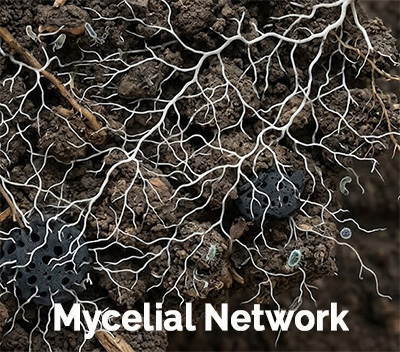
Tilling destroys the soil structure, the aggregates, the worms and arthropods, and the fungal mycelial network so crucial for nutrient cycling. On top of that, the fine soil particles settle together, forming the dreaded hardpan just below the depth of the tillage—
Water will pool up below the surface at that level, everything will turn anaerobic, and your soil nutrients will be locked up! It’s a recipe for weeds, insect pests, and poor crops!
(Sigh) There IS still a use for the tiller though. Use it ONCE in the first year when creating a new garden bed to break up rock hard, impenetrable soil! Then mix in compost like crazy! The soil life takes over AFTER THAT to get to the 20%— O2 level that’s best for your plants. Soil life really is the key! They will do all the work for you!
With the proper amount of oxygen in your soil, roots penetrate deeper and can access more nutrients and water. Plant roots also require oxygen for respiration, which is crucial for energy production and overall growth. Oxygen in the soil is crucial for beneficial microorganisms that decompose organic matter and release nutrients.
The Danger of the Anaerobic Shift
When soil becomes compacted or waterlogged, anaerobic organisms take over. They don’t just take up space; they dismantle all the work you put into your garden by producing toxic byproducts, like alcohol, formaldehyde, and acetic acid, which can chemically burn root hairs.
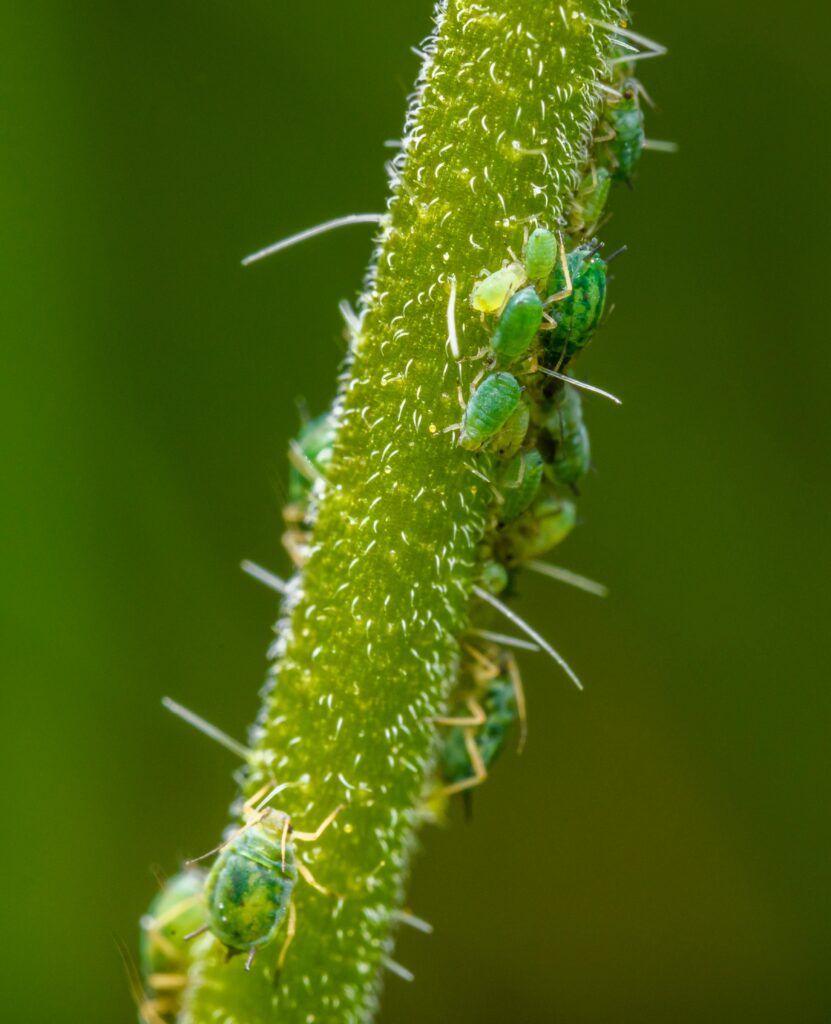
When your plants are stressed this way, they emit chemical signals that insects detect and are instantly attracted to!
We call them “pests”, but they’re not your enemies! Apart from other damage caused to your plants by the elements, or animals that attract “pests”, they’re your indicators that something is wrong with your soil!
It’s actually their role to search for, and to destroy, weak and damaged plants! Healthy plants don’t attract pests!
Nutrient Cycling vs. Nutrient Loss
Living, aerobic soil with biochar retains essential nutrients like nitrogen, sulfur, and every other element, IN available forms, locked in loose ionic bonds and releasing them only when needed by your plants.
In contrast, under anaerobic conditions, your plants’ most important nutrient, nitrogen, converts into a volatile gas and evaporates into the atmosphere.
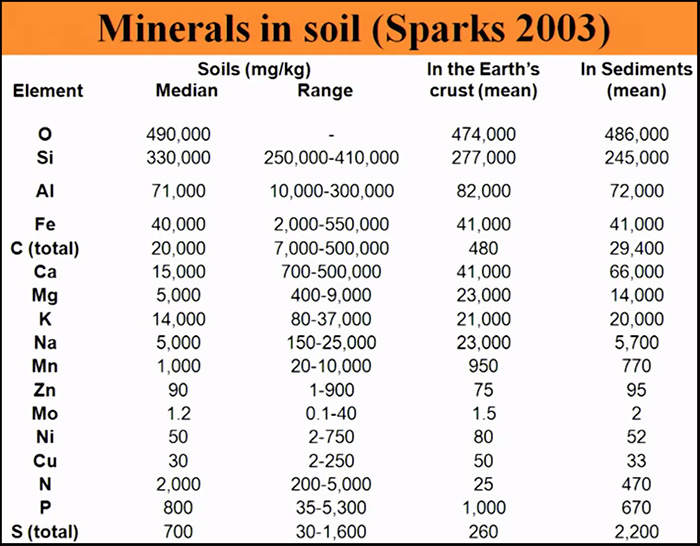
The fundamental issue is nutrient availability. Dr. Elaine Ingham has stated that NO SOIL ON EARTH is deficient in any nutrient. (Soil, not Dirt) They’re just not plant-available because of a lack of soil life.
An illustration of this is the Sparks Study that shows there’s WAY more than enough of ALL the plant nutrients everywhere on earth!
When people say that soil is deficient of minerals and that’s why people are getting sick, or that their crops “used up” all the minerals in the soil it’s simply NOT true!
They’re just not in available forms—
—because the soil’s deficient in LIFE! That’s why our food is mineral deficient… and people are getting sick!
THE 1st STEP— Maintain an aerobic environment for abundant beneficial microorganisms, including every category of the Soil Food Web— and through minimal disturbance, to keep your soil teeming with life! When you build the soil food web, you won’t need any fertilizers! It took me a long time to find this out because I was “trained” by the soil amendment industry to believe otherwise!
Compost has always been viewed as beneficial for the nutrients it contains. However, the fact that it contains billions of ALL the microorganisms your soil needs, including bacteria, fungi, protozoa, and beneficial nematodes, AND that its texture breaks up clay, and binds clay, soils— introducing air to the soil— I believe that’s its most important function!
what can i do next?
A biology first checklist plan
This is going to take time, but start today, no matter what time of the year!
You can start building a compost pile, learn to make biochar, or start a worm bin… or you can write out your plans!
1) Feed your soil regularly
Add compost and leaf mold. Leaf mold contains a higher amount of fungi, so if your soil is bacterially dominated, like most gardens, this may be the most important for you.
2) Keep your soil covered
Use mulch, or living cover crops, to protect microbes from heat, erosion, and drying winds. Rainfall striking the uncovered soil also contributes to a soil compaction layer 6-12 inches (15-30cm) beneath the soil’s surface.
3) Minimize disturbance
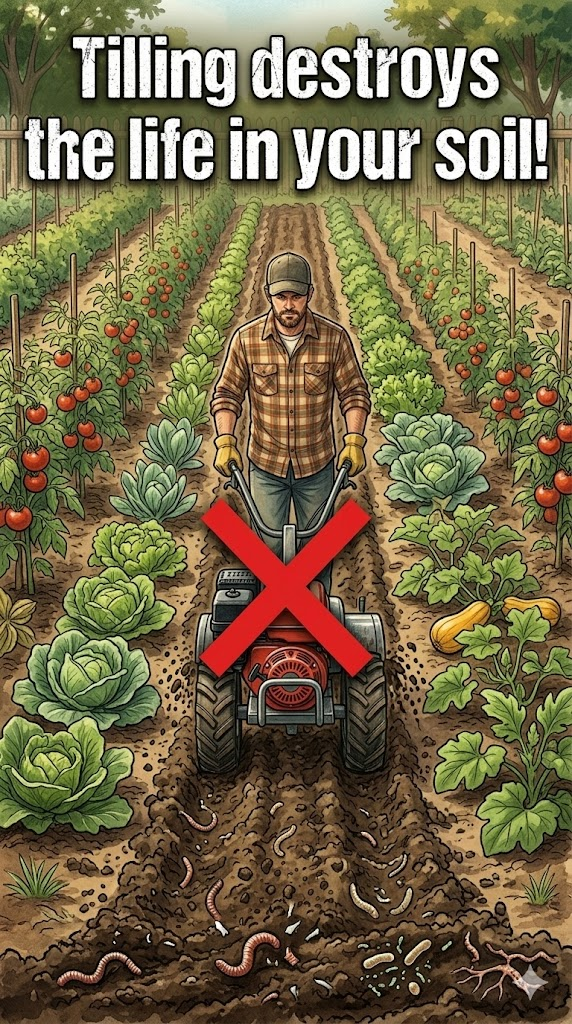
Reduce tillage and aggressive digging. Disturbance breaks fungal networks, kills worms and other creatures, and converts organic matter into CO2 and releases it into the atmosphere instead of where it’s needed— in your soil!
Tilling also produces a hardpan 4-6 inches deep in the soil by breaking structured soil into fine particles that tend to clump together.
But the worst thing it does is destroy the fungal network!
4) Apply Biochar
Biochar does four things:
- Provides homes for the soil life
- Stores plant-available nutrients
- Holds moisture in your soil
- Increases soil aeration
Soil biology FAQs
Quick answers to common questions as you start building living soil.
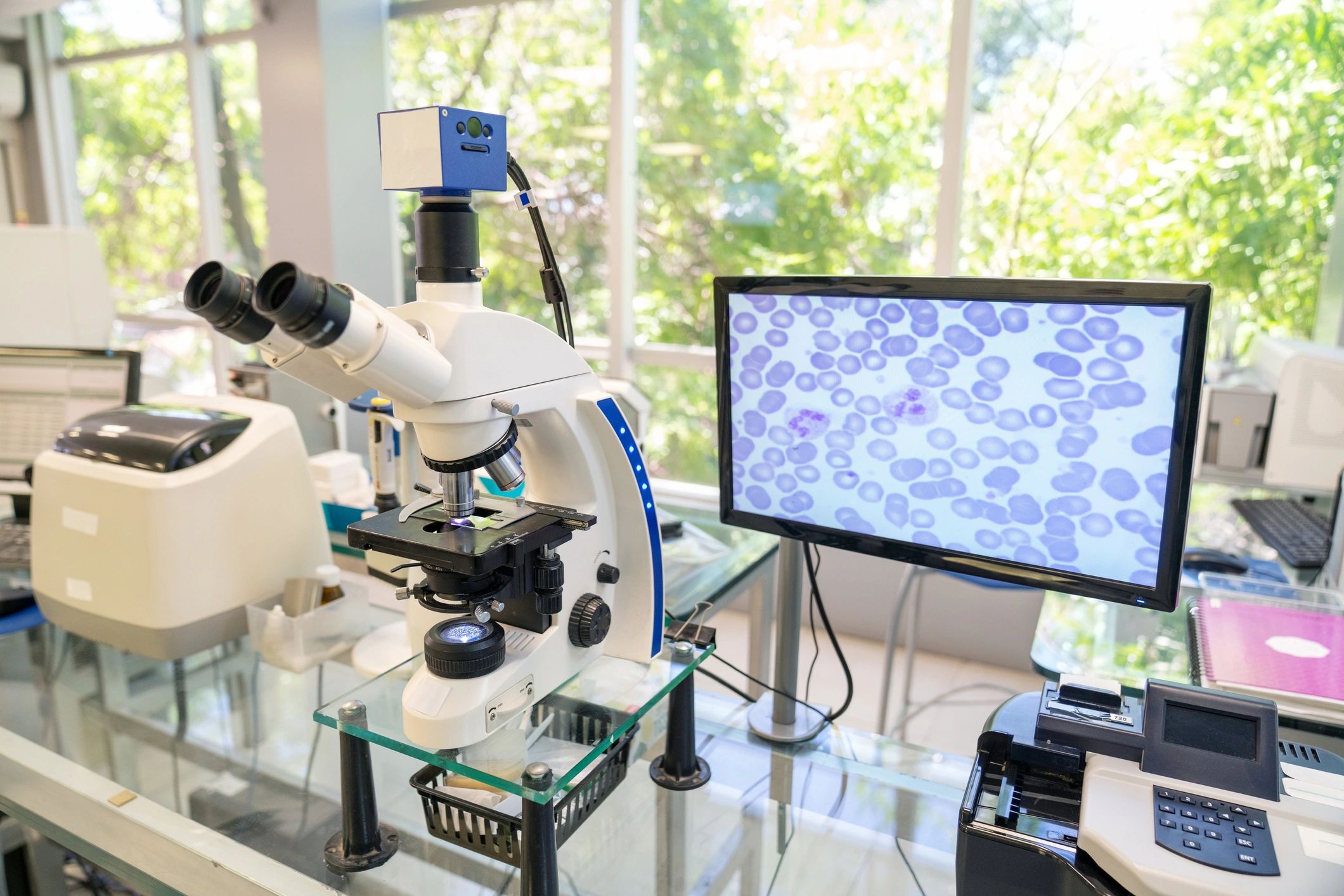
Do I need a microscope to improve my soil?
Microscopy can be a helpful learning tool to find out exactly what’s going on, but you can make big gains by adding compost and biochar, keeping soil covered, and reducing disturbance.
How do I know if my soil biology is improving?
Look for better crumb structure, more earthworms, steadier moisture, fewer crusting issues, and plants that handle stress more easily.
What’s the fastest way to boost microbial life?
Apply finished compost and keep your soil moist and covered. Microbes respond quickly when food and habitat are present.
Will biochar fix poor soil by itself?
Biochar helps most as part of a system. It can only help life if life is present. It must be charged, AND you need Organic Matter (OM) and air in your soil as well!
Are earthworms always a good sign?
Yes—They indicate food and moisture. But the goal is a balanced food web, not just one organism.
Can I build fertility in containers too?
Absolutely. Use quality compost, avoid letting pots dry out completely, and top-dress with worm castings, compost, and Mykos to keep biology active. Learn about Mykos in Our Store.
Want step-by-step demos and real garden results?
Subscribe to Live On What You Grow on YouTube for practical soil biology, composting, and biochar lessons you can apply right away.